
Early (Phase 1) Orthodontics: Guide Growth Early
Free evaluations by age 7. Medi-Cal accepted.
Interceptive treatment uses a child's natural growth to fix jaw and space problems before they harden into bigger ones.

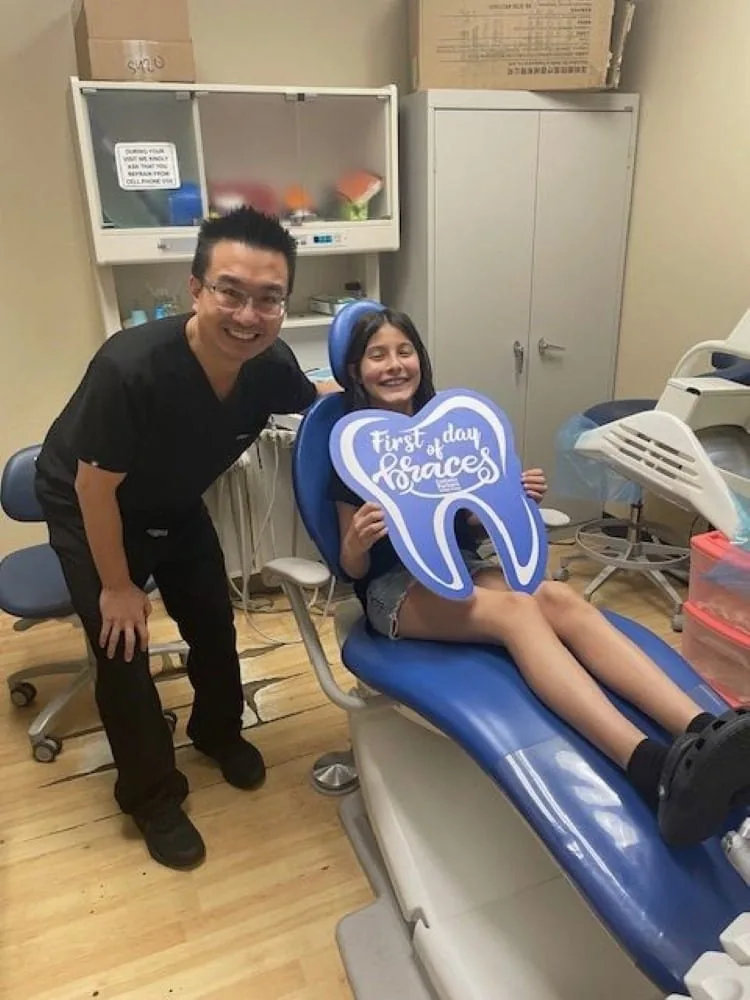
Small Appliances, Big Head Start
- Palatal expanders widen a narrow upper jaw while growth makes it easy
- Space maintainers hold room for adult teeth after early baby-tooth loss
- Interceptive braces or aligners (including Invisalign First) correct developing problems
- Corrective appliances guide jaw growth and habits like thumb-sucking
Phase 1 typically runs 9 to 18 months, followed by a resting period, then a shorter, simpler phase 2 if needed.
Does My Child Need Phase 1?
Most kids do not, and we will tell you that for free. Signs that early evaluation matters: very crowded teeth, crossbites, severe underbites or overbites, mouth breathing, early or late baby-tooth loss, and thumb or finger habits past age 5.
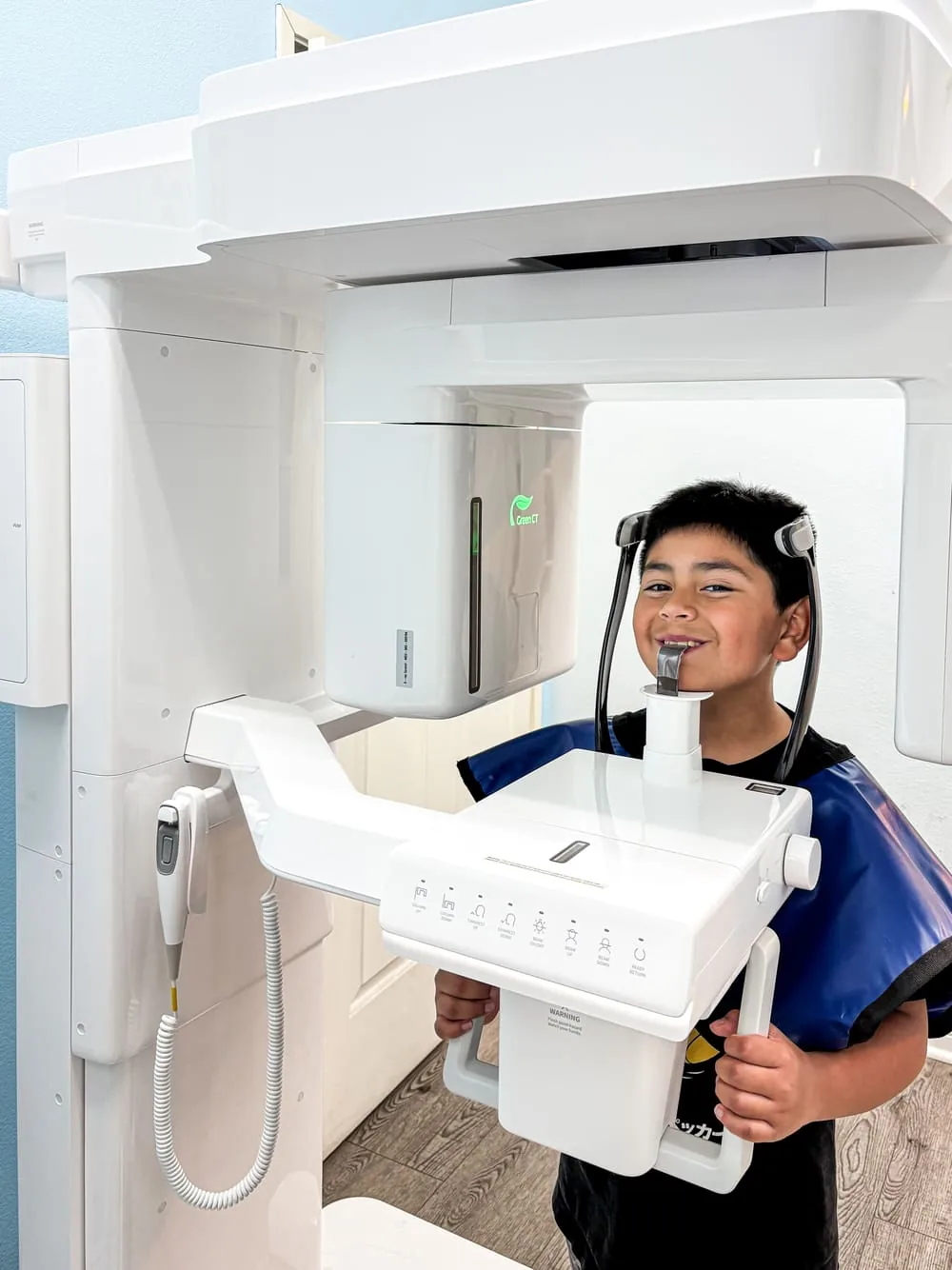
The evaluation is free, including the digital X-ray, and if all is well we simply monitor growth with periodic free checks.
Wondering What It Would Cost for You?
Your consultation, exam and digital X-ray are free. You will leave with a clear plan and an exact price.
Book a Free Consultation
Free exam, consultation and digital X-ray, a $99 value. We will text or call you to confirm a time.
Frequently Asked Questions
What age should early orthodontic treatment start?
Evaluations by age 7; treatment, when needed, commonly starts between 7 and 10 while growth is easiest to guide.
Does phase 1 mean my child avoids braces later?
Sometimes, and when phase 2 is still needed it is usually shorter and simpler because the foundation problems are already fixed.
Does Medi-Cal cover early treatment?
Denti-Cal may cover medically necessary orthodontic treatment under 21. Our evaluation, including eligibility screening, is free. See Medi-Cal braces.